
Mercedes-Benz India, BMW India and Audi India have lined up over 50 new model launches as they seek to recoup previous year's loss in volumes, reports Shally Seth Mohile.

The first major pricing error was made by market leader Maruti Suzuki when it launched its first crossover the S Cross

EcoSport will be offered in four variants in petrol and diesel, mated with automatic transmission for effortless driving.
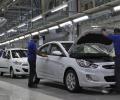
Domestic passenger vehicle sales could touch a record level of nearly 40 lakh units this year on strong demand and companies finding ways to enhance production despite semiconductor shortage, a senior Maruti Suzuki India official said on Monday. Even as the chip shortage issue has improved compared to a year back, the industry is estimated to have a pending order of around 7.5 lakh units of passenger vehicles with Maruti Suzuki India (MSI) alone having around 4.18 lakh units, company senior executive officer, marketing and sales, Shashank Srivastava told PTI. "I think it would be slightly below 4 million (units mark).

The new year will see a line of hatchbacks (including compact SUVs) hit the Indian roads. Rajesh Karkera/Rediff.com offers a peek.

Open order books in February breach 700,000; wait period for some models exceed a year.

Good sowing of kharif crops, better minimum support prices, and fewer Covid-19 cases (in villages) will help the rural growth story to continue, says Maruti.
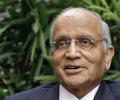
The regulatory burden is the highest on small cars, a key segment of the Indian automobile industry and having a uniform tax structure across all segments of vehicles will not augur well for the sector growth, according to Maruti Suzuki India chairman RC Bhargava. He also said India's economic growth rate could be higher if the manufacturing sector grows fast, which 'unfortunately' has remained a laggard despite the best efforts of the Narendra Modi-led government at the Centre due to implementation gaps at the ground level. "The burden of regulatory changes on the small cars is far higher than the regulatory burden on big cars and that is changing the whole market behaviour.
There is no dearth of players in the high end sports utility vehicle segment in the Indian market anymore.

MG Motor India is investing Rs 2,500 crore by the end of next year to increase the production capacity at its Halol plant in Gujarat, as it gears up to launch its mid-size SUV Astor, according to a top company official. Despite the worsening semiconductor shortage situation, which is likely to continue for at least another six months, the company expects its sales this year to grow by up to 100 per cent over last year. "We have done an investment of Rs 3,000 crore already, and by the end of next year, we will do another Rs 2,500 crore. "We will reach a total of Rs 5,500 crore," MG Motor India president and managing director Rajeev Chaba told PTI.

'While we have done a few thousand kilometres in India, most of the testing and data collection and analysis has been done in the US, Japan and Europe.'
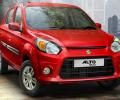
The list clearly shows the dominance of Maruti and Hyundai in the Indian passenger vehicle market.

'The selling in India may emerge as soon as the RBI reverses its interest rate stance.'
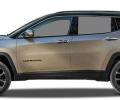
Fiat Chrysler will be shipping its first India made product - the Compass SUV - to right hand drive markets like UK, Japan, Australia and South Africa in the next few months.
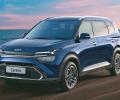
The Carens is a warning for cars such as the Tata Safari, Hyundai Alcazar, Maruti Ertiga, Toyota Innova Crista and Mahindra XUV 700, because Kia punches much harder than others in its weight category.

After years of giving free passes to counterparts from Korea, Japan, US in the Indian auto market, Chinese automakers had planned a major push to grab the fifth largest car market in the world. But the shutdown of factories and logistics hubs in the country following the outbreak of coronavirus is slowly constricting the business of Chinese auto majors which have recently entered India.

The global semiconductor shortage hit passenger vehicle sales in September, with major manufacturers like Maruti Suzuki, Hyundai and Mahindra & Mahindra reporting a decline in sales on Friday. Kia India and Honda Cars also reported a dip in wholesales last month as compared with the year-ago period. Carmakers like Tata Motors, Toyota Kirloskar Motor, Nissan and Skoda, however, reported an increase in passenger vehicle dispatches last month despite supply chain issues.

The country's largest carmaker Maruti Suzuki India (MSI) aims to sell 4-6 lakh CNG units in the current fiscal year depending upon supply situation of essential components, as per a senior company official. The company sold about 2.3 lakh CNG units in 2021-22. MSI currently sells nine of its 15 models with CNG powertrain and is looking to drive in more models with such technology in the coming days.

Automaker Kia India is looking to strengthen its product portfolio as it gears up to introduce a multi-purpose vehicle (MPV) in the country in the first quarter of next year, as per a top company official. The company, which currently sells three products in India -- Seltos, Sonet and Carnival -- is all set to globally unveil its fourth model, a multi-purpose vehicle (codenamed KY), on December 16. While the global showcase would happen next month, the actual market launch of the model would take place later in the January-March quarter.
Macan, a compact SUV, could provide just the volume fillip the car manufacturer needs.

A weaker rupee against the US dollar and the Japanese yen along with margin sustenance pressures have forced companies to raise prices.

Some of the notable models set to make a debut next year include the Tata Harrier, the Mahindra S201, the Kia SP Concept, MG Motors' Boujun 530, and the Honda HR-V.

The Porsche 911 RS is fast becoming a collector's item among India's high net worth individuals.

The electric vehicle evolution in India's passenger vehicle market has remained frozen in time and may see limited adoption over the next decade, experts say.

Akito Tachibana, who took charge as managing director at Toyota's India operations from April 2016, talks to Ajay Modi on Delhi diesel car ban and DeMo.

Nissan and Renault say they will compete with new models, especially small cars, and by growing their dealer network.

The recent currency volatility - rupee's depreciation against international currencies - may have given heartburns to automakers that rely on imports or pay royalty to parent companies abroad. But for Maruti Suzuki India, favourable movement of the yen - the currency that matters the most - against the Indian rupee, has given it reasons to cheer. The yen's sharp fall against the rupee and the rupee's depreciation against the US dollar, which in turn will bump up export realisations, are set to give a margin boost to the maker of Baleno and Brezza, said analysts. The softening of commodity prices and slew of new SUV launches in the coming months will also aid margins, they said.

The list includes compact SUV, mini SUV, premium hatchback and premium MPV.

Offering buyers a car that meets their aspirations & lifestyle needs, the Creta became a style icon. The Creta, which was officially launched on Monday, is a global model, created with an investment of more than Rs 1,000 crore.

The Virtus is indeed designed to look, act and behave like a well-built European sedan that swims in the segment between the compact sedan VW Vento and the larger Passat, says Pavan Lall.

Renault will start with a slew of new products that will be launched over the second half of this year and next year, apart from giving facelifts to the Kwid and Duster.

The company would roll out the BS-VI range of products and an automatic transmission version of its latest car 'Triber' next year.

Currently, Hyundai has 400 dealerships and over 270 rural sales outlets supported by over 1,000 service centers across India.

Tata Motors on Wednesday expanded its electric vehicle range in the country with the launch of Nexon EV MAX, priced between Rs 17.74-19.24 lakh (ex-showroom). Equipped with a 40.5 kWh lithium-ion battery pack, the Nexon EV Max offers 33 per cent higher battery capacity than the Nexon EV, delivering ARAI certified range of 437 km (under standard testing conditions), ensuring uninterrupted inter-city travel. ARAI refers to Automotive Research Association of India. The model produces 105 kW (143 PS) of power and delivers a torque of 250 Nm, resulting in 0 to 100 sprint times in under 9 seconds.

In a rare face off, captains of the auto industry have hit out at the government for not walking the talk. At an industry event in the capital on Wednesday, R C Bhargava, chairman of India's largest carmaker Maruti Suzuki, and Venu Srinivasan, chairman of TVS Motor, questioned the government's intent to support the auto sector. Revenue secretary Tarun Bajaj sat in the audience listening, before his turn came to counter them.

Markets will be closed on Thursday and Friday on account of Holi and Good Friday, respectively.

2015 will witness exciting new car launches that will prompt you to buy at one of them.
The Freelander, a compact yet premium 4X4 SUV, is sold in large European markets.
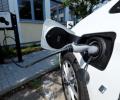
While traditional automakers in India are reeling under a global shortage of semiconductors, the country's electric vehicle (EV) makers, too, are now facing a shortage of lithium-ion batteries, a key raw material. The soaring prices of metals like lithium, nickel and cobalt, which are the primary constituents of the cell, as well as supply chain bottlenecks, are also pushing up the cost of batteries. Battery manufacturers say that prices have been increasing every quarter since the beginning of 2021.
Leading carmakers Maruti Suzuki, Hyundai and Tata Motors reported robust dispatches to dealers in May on the back of strong demand for passenger vehicles across regions, even as the global semiconductor shortage continued to impact production. Mahindra & Mahindra, Kia India, Toyota Kirloskar Motor, Honda Cars and Skoda also witnessed strong demand for their models last month. The month of May also witnessed Tata Motors race ahead of Hyundai in terms of domestic wholesales.
 © 2026 Rediff.com - Investor Information - Advertise with us - Disclaimer - Privacy Policy - Sitemap - Feedback - About us - Terms of use - Grievances